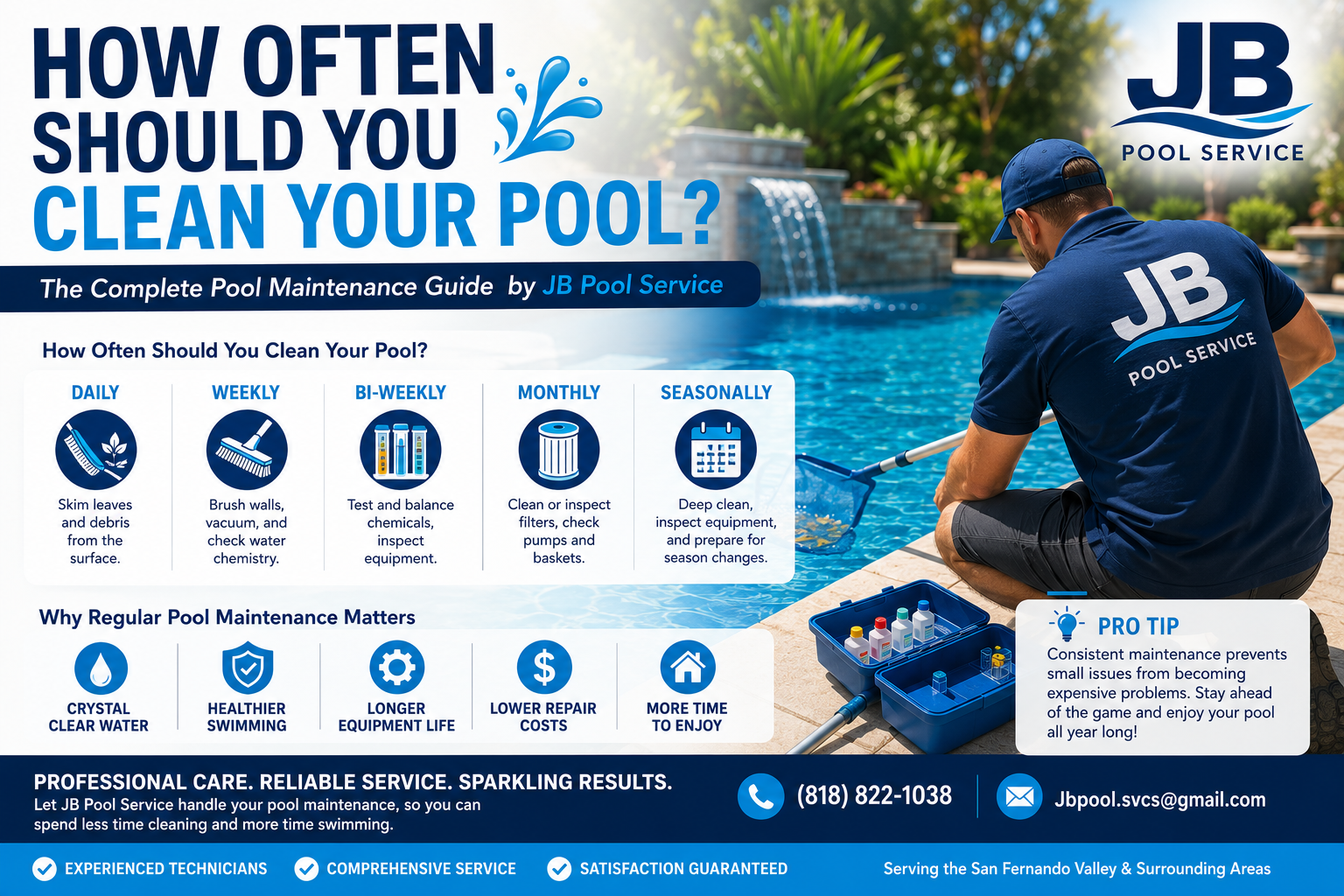
If you own a pool, you already know the feeling — one week of skipped maintenance and suddenly the water goes from crystal clear to cloudy green. Pool care isn’t complicated, but it is consistent. And in Southern California, where pools get used year-round, that consistency is everything.
At JB Pool Service, we’ve been keeping pools clean, balanced, and equipment running perfectly since 2010. In that time, we’ve seen it all — from minor algae blooms that could have been avoided to full equipment failures that started as a skipped chemical check. This guide gives you the full picture on what proper pool maintenance actually looks like, how often it needs to happen, and what signs tell you something’s going wrong before it becomes expensive.
Whether you’re a new pool owner or just looking to understand what your pool service should be doing, this is your resource.
Why Pool Maintenance Can’t Wait
A swimming pool is one of the most enjoyable — and most demanding — features a home can have. The water in your pool is constantly being challenged: sunlight breaks down sanitizer, rain dilutes and unbalances the chemistry, bathers introduce oils, sunscreen, and bacteria, and your equipment runs continuously to circulate and filter it all.
When any one of these factors falls out of balance, the whole system suffers. Algae blooms in unbalanced water. Bacteria thrive when chlorine levels drop. Scale builds up when calcium hardness is off. Filters clog when they’re not cleaned. Pumps and heaters fail when they run unserviced for too long.
The cost of reactive maintenance — fixing problems after they develop — is almost always higher than the cost of preventive care. A green pool recovery can take days and cost several times the price of a monthly service visit. An equipment repair or replacement? Even more.
Consistent, professional pool maintenance is an investment, not an expense.
Pool Maintenance Frequency: What Needs to Happen and When
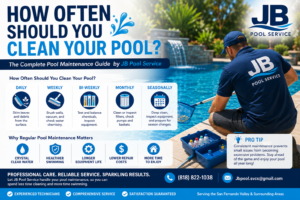
Weekly Maintenance — The Foundation of a Clean Pool
A healthy pool needs weekly attention. This is the baseline — the minimum care that keeps water safe, clear, and inviting throughout the swim season.
Weekly tasks include:
Skimming the surface — Leaves, insects, debris, and anything else that lands on your pool surface need to be removed before they sink and decompose. Decomposing organic matter consumes chlorine and throws off your water chemistry. A good weekly skim takes ten minutes and prevents hours of corrective work.
Brushing the walls and floor — Algae spores cling to surfaces before they bloom in the water. Brushing the walls, steps, and floor of the pool disrupts algae growth and keeps surfaces clean. It also prevents the buildup of calcium and mineral deposits that are much harder to remove once they’ve hardened.
Vacuuming the pool floor — Dirt, sediment, and debris that sinks to the bottom needs to be vacuumed out. Depending on your pool environment — nearby trees, pets, heavy use — this may need to happen more than once a week.
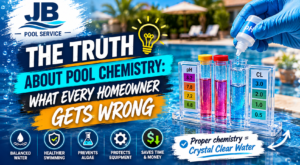
Checking and balancing water chemistry — This is the most critical weekly task. Proper chemical balance keeps the water safe for swimmers, protects the pool surfaces and equipment, and ensures your sanitizer (chlorine or salt) is working effectively. At minimum, weekly checks should cover:
- Free chlorine (ideal range: 1–3 ppm)
- pH (ideal range: 7.4–7.6)
- Total alkalinity (ideal range: 80–120 ppm)
- Cyanuric acid / stabilizer (ideal range: 30–50 ppm)
Emptying skimmer and pump baskets — Clogged baskets restrict water flow, putting stress on your pump and reducing filtration efficiency. This takes two minutes and matters more than most owners realize.
Monthly Maintenance — Going Deeper
On top of weekly care, your pool needs a deeper level of attention once a month.
Backwashing or cleaning the filter — Depending on whether you have a sand filter, DE (diatomaceous earth) filter, or cartridge filter, monthly cleaning methods differ. But all three need regular attention to maintain proper flow rates and filtration effectiveness. A dirty filter doesn’t just reduce efficiency — it can cause equipment damage if left too long.
Checking and adjusting calcium hardness — Low calcium hardness causes water to become corrosive, etching plaster surfaces and attacking metal components. High calcium causes scaling and cloudy water. Monthly checks keep this in the right range (200–400 ppm for most pools).
Inspecting equipment — A monthly visual inspection of your pump, filter, heater, and any automation systems catches small issues before they become big repairs. Look for leaks, unusual sounds, and any visible wear.
Shocking the pool — Even with proper weekly chlorination, pools benefit from a monthly shock treatment — a higher-than-normal dose of chlorine that oxidizes combined chlorines (chloramines), kills resistant bacteria, and refreshes the sanitizing capacity of the water.
Seasonal and Annual Maintenance — The Big Picture
Beyond weekly and monthly care, there are maintenance tasks that happen seasonally or annually, especially in climates like Southern California where pools get heavy use:
Equipment inspection and tune-up — An annual inspection of your pump, motor, filter, heater, and automation systems by a licensed technician can catch failing components before they stop working entirely. This is also the time to check plumbing, valves, and fittings for leaks.
Acid washing — Over time, mineral deposits, staining, and algae can build up on plaster surfaces even with good maintenance. An acid wash removes these deposits and restores the surface to a like-new appearance. This is typically needed every 3–5 years depending on water chemistry and use.
Plaster and surface inspection — Cracks, chips, and rough patches in pool plaster can harbor algae and bacteria and will worsen over time if not addressed. Annual inspection catches these early.
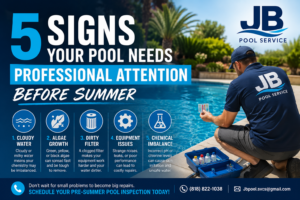
The 5 Most Common Pool Problems — and How to Prevent Them
1. Green or Cloudy Water
Cause: Low chlorine, imbalanced pH, or algae growth.
Prevention: Weekly chemical testing and proper sanitizer levels. Don’t skip a week — especially in summer heat, chlorine burns off faster and algae can bloom in as little as 24 hours in warm, unbalanced water.
Fix: Shock the pool, balance chemistry, brush surfaces, and run the filter continuously until the water clears. For severe algae blooms, an algaecide may also be needed.
2. Cloudy or Hazy Water
Cause: Poor filtration, high calcium hardness, or unbalanced water chemistry.
Prevention: Regular filter cleaning, monthly chemistry checks, and ensuring your pump runs long enough each day (typically 8–12 hours) to fully circulate the water.
Fix: Clarifier treatment, filter cleaning or backwash, and chemistry adjustment.
3. Scaling on Pool Surfaces and Equipment
Cause: High calcium hardness or high pH allows calcium carbonate to precipitate out of the water and deposit on surfaces, tile lines, and inside equipment.
Prevention: Monthly calcium hardness and pH testing. Keep both in the recommended ranges.
Fix: Acid washing for surface scale. Descaling treatments for equipment. If left too long, scaling inside a heater or pump can cause significant damage.
4. Pump or Filter Issues
Cause: Clogged baskets, dirty filters, air leaks, or simply age and wear.
Prevention: Weekly basket cleaning, monthly filter maintenance, and annual equipment inspections.
Signs: Reduced water flow, pump making unusual noise, water not clearing after treatment, filter pressure readings outside normal range.
5. Staining
Cause: Metal staining (iron, copper) from water source or equipment, or organic staining from leaves and debris left in the pool.
Prevention: Skim the pool regularly and address any metal content in your fill water. A sequestering agent can help prevent metal staining.
Fix: Depends on the stain type. Ascorbic acid treats metal stains. Chlorine shock treats organic stains.
DIY vs. Professional Pool Service: What’s Worth Doing Yourself?
Many pool owners ask whether they should handle maintenance themselves or hire a professional. The honest answer is: it depends on your time, knowledge, and risk tolerance.
What homeowners can reasonably do themselves:
- Daily or weekly surface skimming
- Emptying skimmer and pump baskets
- Basic chemical testing with a home test kit or test strips
- Adding chlorine tablets to a floater or feeder
What’s better left to professionals:
- Precise water chemistry analysis and balancing (home test kits are less accurate than professional testing)
- Filter cleaning and backwashing
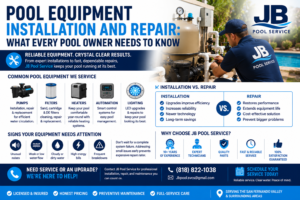
- Equipment inspections and repairs
- Diagnosing circulation or flow problems
- Algae treatments and pool recovery
- Equipment installation
The risk of DIY pool maintenance isn’t just a cloudy pool — it’s equipment damage from improper chemical handling, health risks from unbalanced sanitizer, and costly repairs that result from missed warning signs.
A weekly professional service visit from JB Pool Service gives you peace of mind, a consistently clean pool, and a technician who notices issues before they become emergencies.
What’s Included in a JB Pool Service Visit?
Since 2010, JB Pool Service has provided professional pool care for residential and commercial pools across Southern California. Every service visit includes:
- Complete surface skimming and debris removal
- Brushing walls, steps, and waterline
- Vacuuming the pool floor
- Emptying skimmer and pump baskets
- Water chemistry testing and adjustment
- Filter inspection and maintenance
- Equipment visual inspection
- Report on any issues found
We handle everything from weekly cleanings to full equipment installs — and we show up consistently, communicate clearly, and treat every pool like it’s our own.
Ready for a Pool You Don’t Have to Worry About?
Pool maintenance doesn’t have to be a source of stress. With the right professional team, your pool stays crystal clear, your equipment stays healthy, and you get to focus on enjoying the water — not managing it.
Get a free estimate from JB Pool Service today.
📞 Call Us — jbpoolservices.co ⭐ Professional Pool Care Since 2010
JB Pool Service provides professional pool cleaning, maintenance, chemical balancing, and equipment installation for residential and commercial pools in Southern California. Get a free estimate today.